
Saba University School of Medicine’s (SUSOM) MD program in the Caribbean provides a strong foundation for a career in medicine. Developed by U.S.-trained faculty and aligned with the standards of leading U.S. medical schools, our four-year Caribbean MD program combines a rigorous curriculum with hands-on clinical training to prepare students for the demands of modern healthcare.
Spanning ten semesters, this medical program covers both Basic Sciences and Clinical Medicine, equipping students with the scientific knowledge, clinical skills and practical experience needed to progress toward their medical careers. Graduates can pursue opportunities in the U.S., Canada and internationally, working toward careers as practicing physicians and future healthcare leaders.
Why Choose SUSOM?: Outcomes and Residency
99% Three-Year Residency Placement Rate*
Our graduates have successfully secured placements across the U.S. and Canada.
98% USMLE Step 1 and Step 2 Pass Rates
First-time pass rate for the USMLE Step 1** and Step 2 CK*** (2024).
Internationally Accredited
Accredited by the NVAO, the Accreditation Organization of the Netherlands and Flanders.
3,500+ MD Program Graduates
SUSOM alumni become practicing physicians and healthcare leaders.
Basic Science
Duration: Semesters 1-5
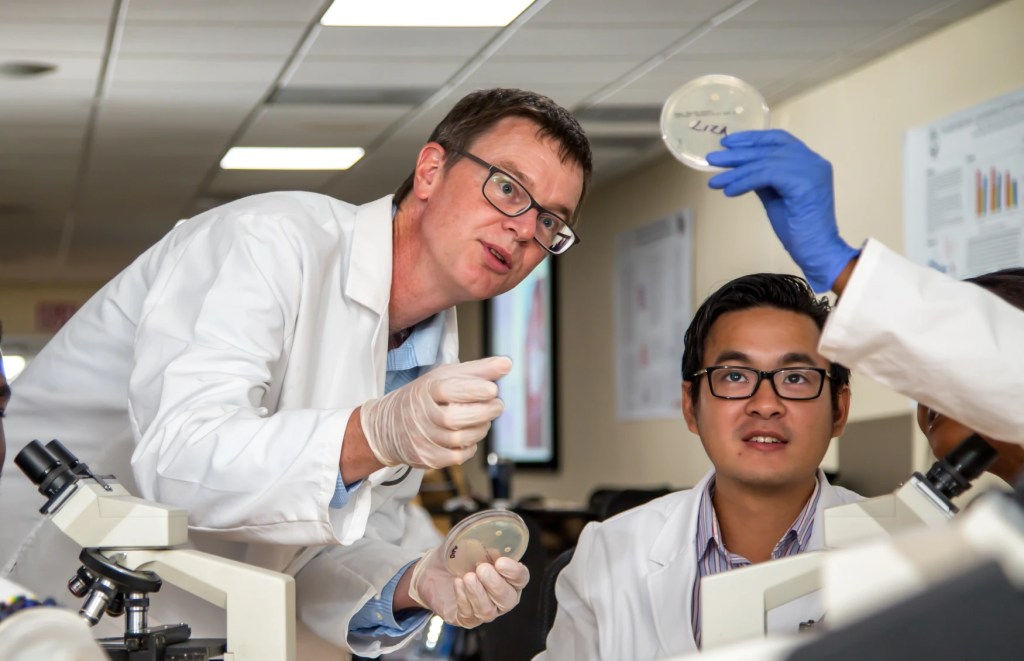
The Basic Science curriculum is delivered over the first half of our MD program. Through five semesters on the Saba campus (two years), you’ll develop a robust understanding of human health and disease, which is essential as you develop your successful medical career.
Clinical Medicine
Duration: Semesters 6-10
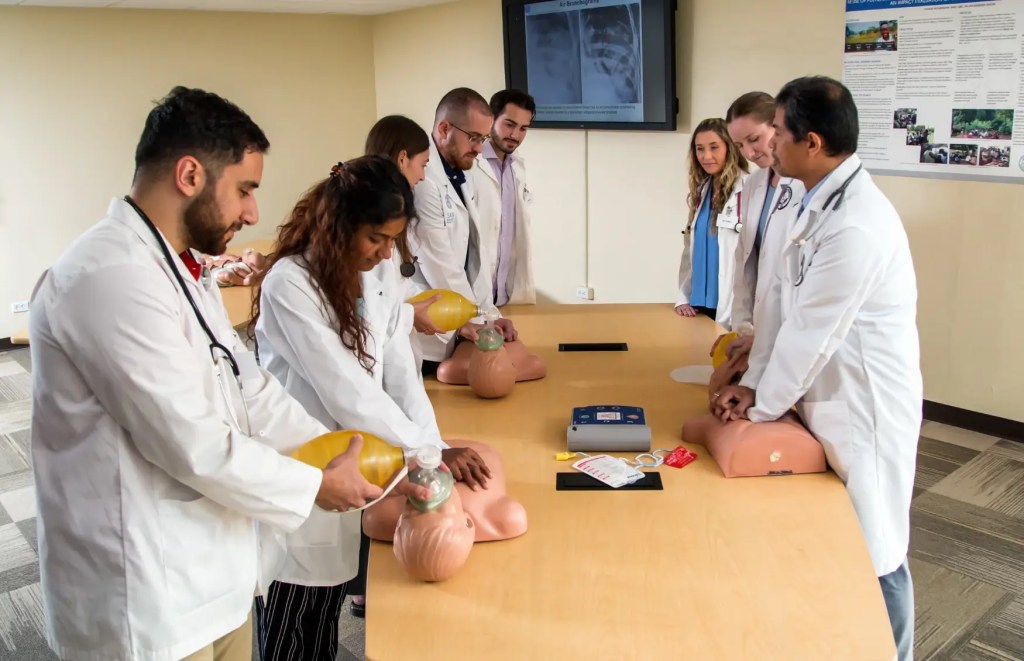
The Clinical Medicine curriculum comprises an 8-week research module and 72 weeks of clinical rotations. This is when students begin to diagnose and treat real patients (with expert supervision) at teaching hospitals, clinics and medical centers in the U.S. and Canada.
4 -Year Medical Program Curriculum Overview
SUSOM offers a comprehensive 10-semester MD program that awards a Doctor of Medicine degree. It combines foundational learning and hands-on clinical experience to prepare students to earn their Caribbean medical degree. From USMLE Step 1 preparation to clinical rotations, students can access guidance to help them understand the exam process, including what USMLE stands for (United States Medical Licensing Examination) and how to prepare for each stage of their medical education.

Year 1 and 2: Basic Science (Semesters 1–5)
During the first five semesters of Basic Science, you will build a strong foundation in medical knowledge through classroom and laboratory learning on the island of Saba. Study human anatomy, physiology, genetics, neuroscience and disease while developing clinical skills.
At the completion of Basic Science, students prepare to take the USMLE Step 1, an important milestone in their medical education. SUSOM’s curriculum is designed to support students as they prepare for this examination and transition to the next stage of their medical training.
Year 3 and 4: Clinical Medicine (Semesters 6–10)
After completing your Basic Science studies and passing the USMLE Step 1, students begin Clinical Medicine with an eight-week research module, followed by 72 weeks of clinical rotations. This phase allows students to apply their medical knowledge in practical settings, developing their diagnostic, clinical reasoning and patient care skills under the supervision of experienced medical professionals.
Clinical rotations take place at affiliated teaching hospitals and clinical sites in the U.S. and select locations in Canada, providing experience across a range of medical specialties and patient populations. Students also prepare for the USMLE Step 2 CK, which assesses their ability to apply medical knowledge to patient care, as they work toward pursuing residency opportunities in the U.S., Canada and internationally.
Admissions Requirements
If you’re interested in applying to SUSOM, review the MD program admission requirements below and gather the supporting documents you’ll need to complete your application.
Prerequisite Courses
| Course | Length of Study | Details |
|---|---|---|
| General Biology | One academic year | Course with a laboratory component; applicants can substitute a biology-related course for ½ year of general biology. |
| General Chemistry | One academic year | Course with a laboratory component. |
| Organic Chemistry | One academic year | Course with a laboratory component. An applicant may substitute ½ year of Biochemistry for ½ year of Organic Chemistry. |
| English | One academic year | One year of college-level English literature or composition. Applicants must demonstrate proficiency in writing, reading and oral communication. |
Supporting Documents
- Official transcript(s) from each college, university and/or professional school attended.
- Official MCAT report (scores are required for all applicants who are U.S. citizens, nationals or permanent residents. If Canadian or international applicants have taken the MCAT, they must submit their scores).
- Two letters of recommendation.
- Personal statement (max. 500 words).
- Two passport-size (2” x 2”) color photographs.
English is the language of instruction at Saba University School of Medicine. If your first language is not English, you must submit proof of English proficiency, such as through TOEFL (Test of English as a Foreign Language). Other comparable English proficiency tests may also be accepted.
Caribbean MD Program Tuition and Fees
At SUSOM, we believe that aspiring physicians should have the opportunity to pursue their medical education, despite any financial challenges. Our four-year MD program offers several financial aid options, including grants and scholarships for eligible students to help make financing your medical education more manageable.

Academic Calendar
View our academic calendar for key enrollment, graduation and tuition due dates.

SUSOM Catalog
Our catalog provides a comprehensive overview of the MD program, school policies and much more.
A History of Success

For more than 30 years, SUSOM has offered extensive medical education and hands-on training in the Caribbean. Our students secure post-graduate residency placements at teaching hospitals and medical centers in the U.S. and Canada.
Dedicated Medical Faculty
Saba University School of Medicine’s faculty educates, supports and challenges students to achieve their maximum potential in the field of medicine. All SUSOM professors possess advanced doctoral and medical degrees (e.g. MD or PhD), postgraduate training in a medical or academic specialty, and proven teaching and research experience.
Featured Faculty
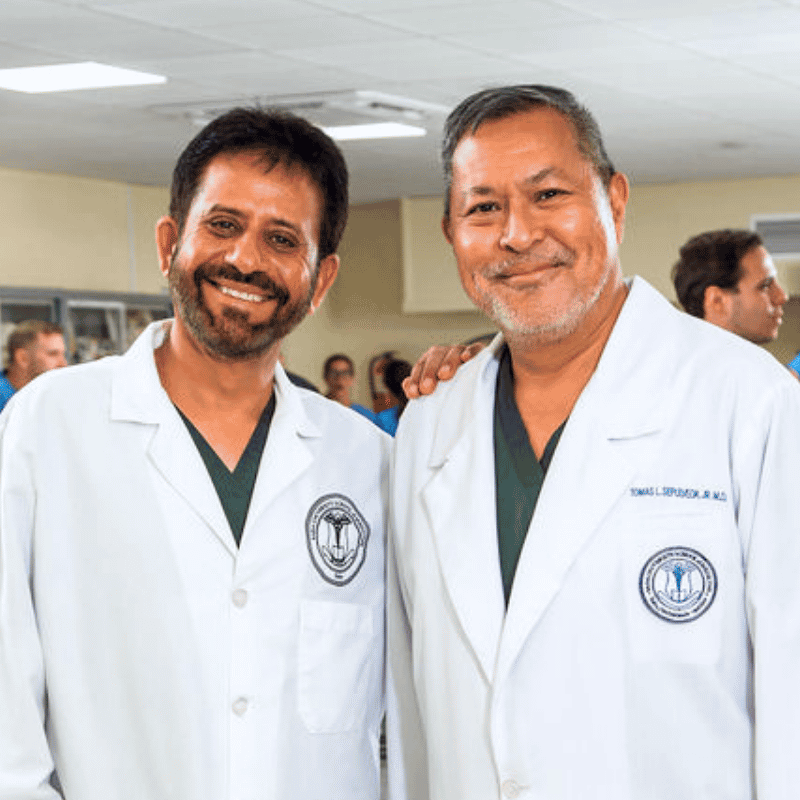
The faculty and administration at Saba University School of Medicine bring extensive experience and insight to the challenge of medical education. Below you’ll find some featured faculty members who teach the Basic Science curriculum.

Shruti Singh, MD
Biography:
Shruti Singh, MD, has over seven years of experience teaching Medical Biochemistry and Molecular Biology. Her teaching aligns with the integrated USMLE curriculum and combines lectures, problem-based learning (PBL) and team-based learning (TBL) to support medical students in mastering key concepts.

Vaughn Huckfeldt Jr., PhD
Biography:
Vaughn Huckfeldt, PhD, is Director of the Center for Student Learning at SUSOM, bringing decades of teaching experience to support students’ academic and personal development. He specializes in evidence-based teaching methods that build conceptual understanding and help students apply their knowledge to clinical practice.
Start your medical education in January, May or September
SUSOM Student Testimonials
Osama Khan, MD
Class of 2010
Board-Certified Anatomical Pathologist
California, United States
Maitri Makwana, MD
Class of 2024
Resident Physician (OB/GYN)
Missouri, United States
FAQs About the MD Program at SUSOM
At SUSOM, as at many medical schools, the MD program lasts for four years (10 semesters). Students spend the first half of the med program studying on our Saba campus for Basic Science (semesters 1-5) and then the second half in the U.S. (core and electives) and Canada (select electives) for Clinical Medicine rotations (semesters 6-10).
Yes, you can study medicine in the Caribbean and pursue a medical career in Canada. Saba University School of Medicine graduates have secured residency placements in both Canada and the U.S. After earning your MD degree, you must meet the relevant eligibility requirements and complete the required licensing examinations and other provincial or territorial requirements to practice medicine in Canada.
Basic Science covers the scientific foundations of medicine, including anatomy, physiology and disease, across the first five semesters on the island of Saba. Clinical Medicine follows with an eight-week research module and 72 weeks of clinical rotations in the U.S. and select locations in Canada, where students apply their knowledge and gain practical experience across medical specialties.
Semester One: 30 Credit Hours
| Course | Name | Credit Hours |
|---|---|---|
| MED 512 | Human Body Structure and Function | 15 |
| MED 514 | Human Histology and Physiology | 13 |
| MED 516 | Clinical Skills I | 2 |
Semester Two: 30 Credit Hours
| Course | Name | Credit Hours |
|---|---|---|
| MED 611 | Metabolism and Nutrition | 9 |
| MED 612 | Genetics and Development | 4 |
| MED 613 | Infection / Defense / Response | 12 |
| MED 614 | Medical Ethics | 2 |
| MED 616 | Clinical Skills II | 3 |
Semester Three: 32 Credit Hours
| Course | Name | Credit Hours |
|---|---|---|
| MED 714 | Neuroscience and Neurology | 10 |
| MED 715 | Systems and Disease I (Introduction/Endocrine) | 11 |
| MED 716 | Clinical Skills III | 3 |
| MED 719 | Behavioral Medicine | 8 |
Semester Four: 33 Credit Hours
| Course | Name | Credit Hours |
|---|---|---|
| MED 811 | Systems and Disease II (Repro/GI/Peds) | 13 |
| MED 812 | Systems and Disease III (CV/Resp/Renal) | 13 |
| MED 816 | Clinical Skills IV | 6 |
| MED 819 | Research Curriculum – Evidence-Based Medicine | 1 |
Semester Five: 31 Credit Hours
| Course | Name | Credit Hours |
|---|---|---|
| MED 911 | Systems & Disease IV (MSK/Heme/Immuno/Integ/Multi) | 12 |
| MED 916 | Clinical Skills V | 3 |
| MED 918 | Foundations of Clinical Medicine | 16 |
Have a specific question?
Book a time with an advisor, or call our hotline directly
For Prospective Students
SUSOM is committed to supporting prospective students throughout the application process. Please see the following links to learn more about each topic:
Get in Touch for More Information
If you have any questions, fill out the form below and a representative will get back to you.
Terms & conditions
* 99% Three-Year Residency Placement Rate is the percentage of students attaining a residency position out of all graduates or expected graduates in 2023-24, 2024-25 and 2025-26 who were active applicants in the NRMP match or attained a residency outside the NRMP match.
** First-time pass rate defined as total number of students passing the USMLE Step 1 on their first attempt divided by the total number of students taking USMLE Step 1 for the first time in calendar year 2024. In order to sit for the USMLE Step 1 exam, the student must successfully complete the Basic Sciences curriculum and such other prerequisites as the school may establish at its discretion.
*** First-time pass rate defined as total number of students passing the USMLE Step 2 CK on their first attempt divided by the total number of students taking USMLE Step 2 CK for the first time in calendar year 2024. In order to sit for the USMLE Step 2 CK exam, the student must successfully complete the Clinical Medicine curriculum and such other prerequisites as the school may establish at its discretion.