
Clinical Training and Residency
The Clinical Medicine curriculum comprises an 8-week research module and 72 weeks of clinical rotations.
Inquire TodayOverview
Semesters 1-5: Island of Saba
Semesters 6-10: U.S. & Canada
Post Graduation Outcome
Clinical Training
The Clinical Medicine curriculum at Saba University School of Medicine (SUSOM) takes place over the second half of the 4-year MD program – it includes an 8-week research module and 72 weeks of clinical rotations in North America.
For clinical rotations, successful students will leave the Basic Science campus on the island of Saba and join students from other schools at teaching hospitals in the United States (core and electives) and Canada (select electives).
SUSOM carefully manages the Clinical Medicine program to ensure that there are enough rotation positions available so that our students can complete their clinical semesters without undue delays. During these clinical rotations (clerkships), students work directly with physicians and hospital staff, conducting physical examinations, taking histories, presenting cases, analysing lab reports and attending workshops, conferences and grand rounds. The on-site experience is supplemented by additional case studies and associated assignments from the SUSOM team.


Core Rotations · 42 weeks
| Rotation | Length | Focus |
|---|---|---|
| Internal Medicine | 12 weeks | Students will learn to assess, diagnose and manage adult patients in clinical settings. |
| Surgery | 12 weeks | Develop skills in basic surgical procedures, patient assessment and post-operative care. |
| Obstetrics and Gynecology | 6 weeks | Learn the fundamentals of pregnancy, prenatal care, labor, delivery and postpartum care. |
| Pediatrics | 6 weeks | Learn to perform physical examinations on infants and children in clinical settings. |
| Psychiatry | 6 weeks | Learn to recognize major psychiatric illnesses through mental status examinations. |
Elective Rotations · 30+ weeks
After successfully completing their core rotations, MD program participants must then complete elective rotations. Students who plan to practice in California or Texas must take four weeks of Family Medicine in a hospital that has an appropriately credentialed residency training program.
300+
Elective Sites in U.S. and Canada
4 Weeks
Required Primary Care Elective
A Selection of Electives
Rotation Sites
SUSOM has extensive relationships with ACGME-approved teaching hospitals throughout the U.S., and university affiliated hospitals in Canada. The following are the major ACGME-approved teaching hospitals in the United States where Saba students regularly do their core rotations.
California
Mission Community Hospital
Los Angeles
Connecticut
Bridgeport Hospital – Member of Yale New Haven Health System
Bridgeport
St. Mary’s Hospital – Member of Trinity Health
Waterbury
District of Columbia

St. Elizabeth’s Hospital
Southeast Washington
Florida
Holy Cross Health
Fort Lauderdale
Larkin Community Hospital
South Miami
Manatee Memorial Hospital
Bradenton
Louisiana
Brentwood Hospital
Shreveport
Leonard J. Chabert Medical Center – Affiliate of Ochsner Health System
Houma
Maryland

Ascension St. Agnes
Baltimore
Luminis Health Anne Arundel Medical Center
Parole

Spring Grove Hospital Center – Owned and operated by the State of Maryland
Catonsville
Missouri

St. Luke’s Hospital
Kansas
SSM Health St. Mary’s Hospital
Jefferson City
New York
One Brooklyn Health
Brooklyn
Wyckoff Heights Medical Center
Brooklyn
Virginia

Northern Virginia Mental Institute
Woodburn
USMLE Step 2 CK
USMLE Step 2 CK assesses your ability to apply clinical knowledge to patient care through a multiple choice exam. Your core clinical rotations will help prepare you by providing hands on experience with patient cases, examinations and preceptor feedback.
Before receiving approval to take Step 2 CK, students must demonstrate proficiency in Clinical Medicine through a comprehensive exam such as the Comprehensive Clinical Science Exam (CCSE). Passing USMLE Step 1 and Step 2 CK is required for graduation and medical licensure, making strong preparation for these exams an important part of your medical education.
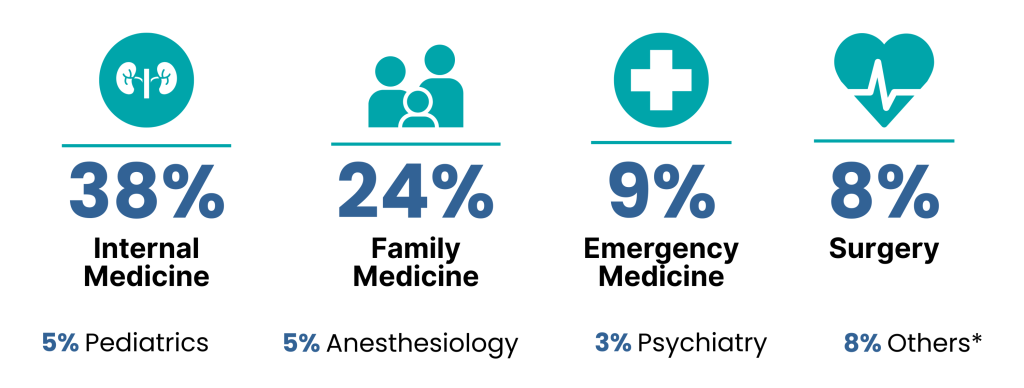
2026 Residency Outcomes
Advice From Our Graduates
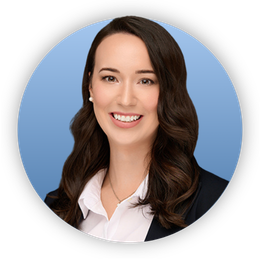
“Throughout medical school, challenges and setbacks are almost inevitable for every student. In those tough moments, remember the reasons why you started this journey in the first place!”
Corinne Caissie, MD
Resident Physician (Internal Medicine)
Yale New Haven Health Bridgeport Hospital (CT, U.S.)
SUSOM Alum 2025
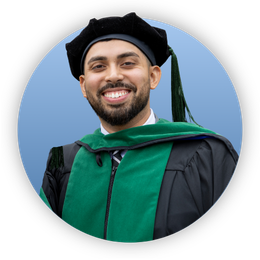
“Believe in the education and experiences you have accumulated as stepping stones toward your future career. Celebrate the small victories, prioritize self-care and don’t hesitate to lean on your mentors.”
Danish A. Zamir, MD
Resident Physician (Internal Medicine)
Central Michigan University (Michigan, U.S.)
SUSOM Alum 2025
Have a specific question?
Book a time with an advisor, or call our hotline directly
For Prospective Students
SUSOM is committed to supporting prospective students throughout the application process. Please see the following links to learn more about each topic:
Get in Touch for More Information
*99% Three-Year Residency Placement Rate is the percentage of students attaining a residency position out of all graduates or expected graduates in 2023-24, 2024-25 and 2025-26 who were active applicants in the NRMP match or attained a residency outside the NRMP match.
**First-time pass rate defined as total number of students passing the USMLE Step 1 on their first attempt divided by the total number of students taking USMLE Step 1 for the first time in calendar year 2024. In order to sit for the USMLE Step 1 exam, the student must successfully complete the Basic Science curriculum and such other prerequisites as the school may establish at its discretion.
**First-time pass rate defined as total number of students passing the USMLE Step 2 CK on their first attempt divided by the total number of students taking USMLE Step 2 CK for the first time in calendar year 2024. In order to sit for the USMLE Step 2 CK exam, the student must successfully complete the Clinical Medicine curriculum and such other prerequisites as the school may establish at its discretion.